rubyforge

January 2012 releases

We're cruising ahead with January 2012 releases. Grab the data from Google Code site or from the teragrid.

Freecode - done (formerly known as Freshmeat)
Savannah - done
Tigris - done
Rubyforge - done
Objectweb - done
Launchpad - done

Google Code - still running
Alioth - bug submitted #54
Gihub - will start as soon as Google is done

Free Software Foundation - bug still not fixed (this is my fault) #51

Interesting things: most popular data from November ..... drumroll please.... Google Code, Github.

November 2011 data entered

Here is the status of the November 2011 collection:

done & ready to download on Google Code or query in Teragrid...
============
RUBYFORGE
OBJECTWEB
TIGRIS
LAUNCHPAD
SAVANNAH
ALIOTH
GITHUB

still collecting...
============
GOOGLE

collectors broken and waiting to be fixed...
============
FRESHMEAT (BUG # 43)
UDD (BUG # 50)
DEBIAN (BUG # 48)
FREE SOFTWARE FOUNDATION (BUG # 51)

What developers are working together in Rubyforge projects?

Description

This graph shows a network diagram of the developers who worked together in Rubyforge projects. The purpose of this visualization was to identify developers who have a role in the most projects and interact with the most developers. The twenty developers with the most connections are represented.

Visualization

RF Network

For an interactive visual, click the image below and then click the "Recompute layout" button (connected dots).


SQL Script

Use the results from the following query to create a temp table. This query finds all projects with more than one developer and lists the developer pairings.

SELECT DISTINCT a.proj_unixname, a.dev_loginname, b.dev_loginname
FROM rf_developer_projects a
INNER JOIN rf_developer_projects b
ON a.proj_unixname = b.proj_unixname
WHERE a.datasource_id = <current>
AND a.proj_unixname = b.proj_unixname
AND a.dev_loginname <> b.dev_loginname

Use the temp table for the following query that finds out which developers are on the most multi-developer projects.

SELECT sender_count AS Sender Count, COUNT(mailing_list) AS Frequency
FROM al_temp_table
GROUP BY Sender Count
ORDER BY Frequency DESC;

Using the results from the previous query, you can find the connections for any developer to create the network diagram.

SELECT developer1, developer2
FROM al_temp_table
WHERE developer1 = 'developer_name'

What are the most common programming languages used by projects listed in Rubyforge?

Description

This chart shows the top programming languages used by projects in Rubyforge.

Visualization

SQL Script

SELECT rfpl.description AS Lang, COUNT( DISTINCT rfpl.proj_unixname ) AS Count
FROM rf_project_programming_language rfpl
WHERE rfpl.datasource_id = <current>
GROUP BY Lang
ORDER BY Count DESC;

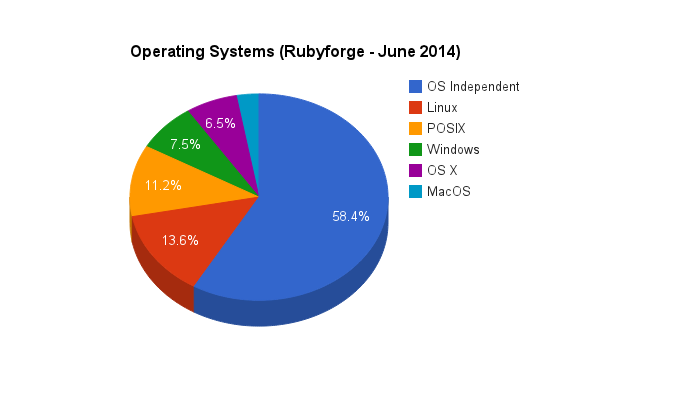
What are the most common operating systems used by projects listed in Rubyforge?

Description

This chart shows the top operating systems used by projects in Rubyforge.

Visualization

SQL Script

SELECT rfop.description AS System, COUNT( DISTINCT rfop.proj_unixname ) AS Count
FROM rf_project_operating_system rfop
WHERE rfop.datasource_id = <current>
GROUP BY System
ORDER BY Count DESC;

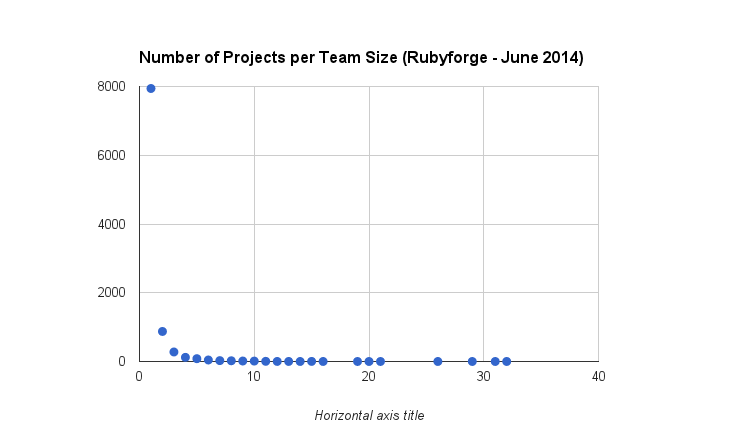
How many projects of each team size are listed in Rubyforge?

Description

This chart shows the number of projects of each team size listed in Rubyforge.

Visualization

Projects listed as having 0 developers were disregarded (152 projects).

SQL Script

SELECT DISTINCT dev_count, COUNT( DISTINCT proj_unixname ) AS count
FROM rf_projects
WHERE datasource_id = <current>
GROUP BY dev_count
ORDER BY count DESC , dev_count

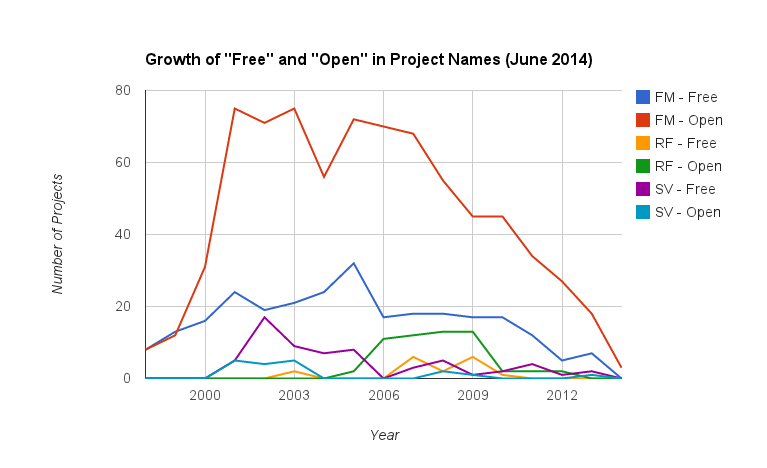
How has the use of "Free" and "Open" in project names grown by year?

Description

This chart shows the number of new projects in each repository that use the words "Free" and "Open" in project names through 2010.

Visualization

SQL Script

Freshmeat:

SELECT YEAR( date_added ) , COUNT( DISTINCT project_id ) AS Count
FROM fm_projects
WHERE projectname_full LIKE "%free%"
AND datasource_id = <current>
GROUP BY YEAR( date_added )
ORDER BY YEAR( date_added );


SELECT YEAR( date_added ) , COUNT( DISTINCT project_id ) AS Count
FROM fm_projects
WHERE projectname_full LIKE "%open%"
AND datasource_id = <current>
GROUP BY YEAR( date_added )
ORDER BY YEAR( date_added );

Rubyforge:

SELECT YEAR( date_registered ) , COUNT( DISTINCT proj_unixname ) AS Count
FROM rf_projects
WHERE proj_unixname LIKE "%free%"
AND datasource_id = <current>
GROUP BY YEAR( date_registered )
ORDER BY YEAR( date_registered );


SELECT YEAR( date_registered ) , COUNT( DISTINCT proj_unixname ) AS Count
FROM rf_projects
WHERE proj_unixname LIKE "%open%"
AND datasource_id = <current>
GROUP BY YEAR( date_registered )
ORDER BY YEAR( date_registered );

Savannah:

SELECT YEAR( registration_date ) , COUNT( DISTINCT project_name ) AS Count
FROM sv_projects
WHERE project_name LIKE "%free%"
AND datasource_id = <current>
GROUP BY YEAR( registration_date )
ORDER BY YEAR( registration_date );


SELECT YEAR( registration_date ) , COUNT( DISTINCT project_name ) AS Count
FROM sv_projects
WHERE project_name LIKE "%open%"
AND datasource_id = <current>
GROUP BY YEAR( registration_date )
ORDER BY YEAR( registration_date );

How many projects at each repository share identical short project names?

Description

This chart shows the number of projects at each repository that share project names as of May 2011.

Visualization

project-names

SQL Script

RF-FM

SELECT COUNT( f.projectname_short_fixed )
FROM fm_projects f, rf_projects r
WHERE f.projectname_short_fixed = r.proj_unixname
AND f.datasource_id = <current>
AND r.datasource_id = <current>;

RF-OW

SELECT COUNT( r.proj_unixname )
FROM rf_projects r, ow_projects o
WHERE r.proj_unixname = o.proj_unixname
AND r.datasource_id = <current>
AND o.datasource_id = <current>;

FM-OW

SELECT COUNT( f.projectname_short_fixed )
FROM fm_projects f, ow_projects o
WHERE f.projectname_short_fixed = o.proj_unixname
AND f.datasource_id = <current>
AND o.datasource_id = <current>;

RF-FSF

SELECT COUNT( f.proj_unixname )
FROM fsf_projects f, rf_projects r
WHERE f.proj_unixname = r.proj_unixname
AND f.datasource_id = <current>
AND r.datasource_id = <current>;

FM-FSF

SELECT COUNT( f.proj_unixname )
FROM fsf_projects f, fm_projects fm
WHERE f.proj_unixname = fm.projectname_short_fixed
AND f.datasource_id = <current>
AND fm.datasource_id = <current>;

OW-FSF

SELECT COUNT( f.proj_unixname )
FROM fsf_projects f, ow_projects o
WHERE f.proj_unixname = o.proj_unixname
AND f.datasource_id = <current>
AND o.datasource_id = <current>;

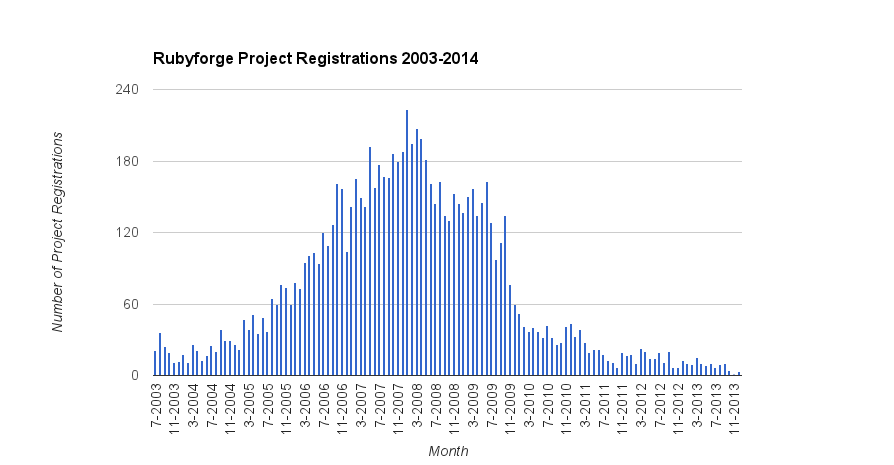
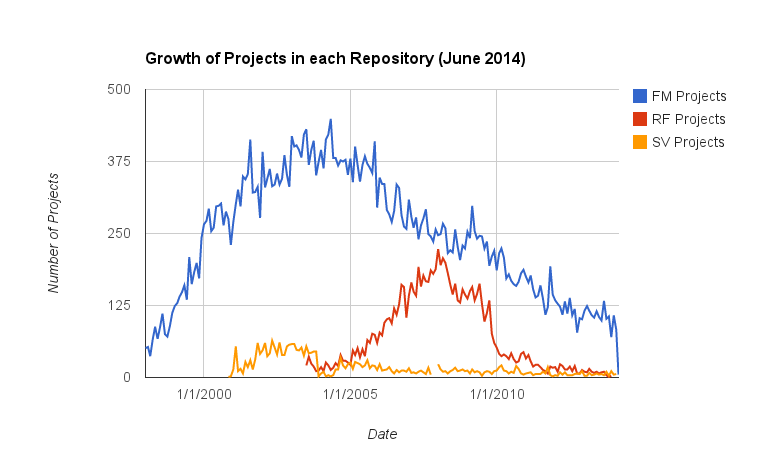
How have projects in each repository grown by year?

Description

This chart shows the number of NEW projects added to each repository by month/year.

Visualization

Notes: RF had 697 projects without a project start date. OW had one project started in 1970.
SQL Script


SELECT MONTH( date_added ) , YEAR( date_added ) , COUNT( DISTINCT project_id )
FROM fm_projects
WHERE datasource_id = <current>
GROUP BY YEAR( date_added ) , MONTH( date_added )
ORDER BY YEAR( date_added ) , MONTH( date_added );


SELECT MONTH( date_registered ) , YEAR( date_registered ) , COUNT( DISTINCT proj_unixname )
FROM rf_projects
WHERE datasource_id = <current>
GROUP BY YEAR( date_registered ) , MONTH( date_registered )
ORDER BY YEAR( date_registered ) , MONTH( date_registered );


SELECT MONTH( registration_date ) , YEAR( registration_date ) , COUNT( DISTINCT project_name )
FROM sv_projects
WHERE datasource_id = <current>
GROUP BY YEAR( registration_date ) , MONTH( registration_date )
ORDER BY YEAR( registration_date ) , MONTH( registration_date );

How many projects are listed in each repository?

Description

This chart shows the number of projects that FLOSSmole most recently collected from each repository.

Visualization

Project Count Chart


SQL Script


SELECT COUNT( DISTINCT proj_name )
FROM gc_projects
WHERE datasource_id = <current>;


SELECT COUNT( DISTINCT project_id )
FROM fm_projects
WHERE datasource_id = <current>;


SELECT COUNT( DISTINCT project_name )
FROM lp_projects
WHERE datasource_id = <current>;


SELECT COUNT( DISTINCT proj_unixname )
FROM rf_projects
WHERE datasource_id= <current>;


SELECT COUNT( DISTINCT proj_num )
FROM fsf_projects
WHERE datasource_id= <current>;


SELECT COUNT( DISTINCT project_name )
FROM sv_projects
WHERE datasource_id= <current>;


SELECT COUNT( DISTINCT unixname )
FROM tg_projects
WHERE datasource_id = <current>;


SELECT COUNT( DISTINCT proj_unixname )
FROM ow_projects
WHERE datasource_id= <current>;

Syndicate content